
Why Children Need Opportunities to Figure Things Out
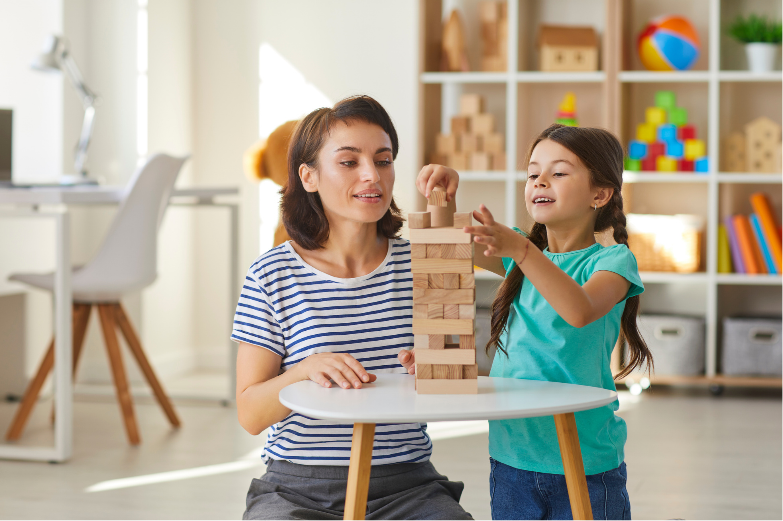
A child is building something with blocks. The structure looks almost complete, but one more block makes the whole thing collapse. The child looks at the fallen pieces, pauses and starts arranging them again.
As a parent, watching this can be interesting. We can see the solution almost immediately, and it is tempting to show our child exactly what to do. But sometimes, waiting a little longer gives children something more valuable: an opportunity to work things out independently.
Think about the questions children ask during an ordinary day. Why does this happen? What if I try it differently? Can I make this work another way?
These moments are small opportunities to practise thinking through everyday problem-solving activities for kids.
Problem-solving is not limited to mathematics worksheets, complicated puzzles or classroom exercises. Children use it when they organise their toys, decide how to complete a project, work through a disagreement or try to understand why a game is not behaving as expected.
Parents do not need special equipment to create engaging brain games for kids. A few household objects, an interesting challenge and enough time to experiment can create useful learning experiences.
Let’s look at five practical problem-solving activities for kids that can turn ordinary playtime into opportunities for reasoning, creativity and thoughtful decision-making.
Why Should Children Practise Problem-Solving?
Knowing an answer is useful, but understanding how to reach that answer is equally important.
When children work through a challenge, they have to observe what is happening, consider their options and decide what to try. With regular opportunities to practise, you can strengthen essential problem-solving skills for children along with several other thinking abilities.
Critical Thinking: Children learn to examine a situation instead of accepting the first idea that comes to mind.
Creative Thinking: They discover that one challenge can sometimes have several possible solutions.
Decision-Making: Comparing different choices helps children think about the likely results of their actions.
Patience and Persistence: When an attempt does not work, children get an opportunity to reconsider their approach rather than give up immediately.
Confidence: Completing a challenge through their own effort can help children feel more comfortable tackling unfamiliar tasks.
These abilities do not develop overnight. Children need opportunities to use them in different situations, and everyday activities can provide a comfortable starting point.
5 Fun Problem-Solving Activities for Kids
The following fun learning activities for kids use familiar materials and simple instructions. You can adjust the difficulty according to your child’s age, interests and experience.
1. Build a Tower That Can Survive a Challenge
Skills developed: Planning, creative thinking, spatial reasoning and experimentation.
Collect building blocks, paper cups, cardboard pieces or small empty boxes. Place them on a table and give your child one interesting task:
“Can you make a tower that stays standing without anyone holding it?”
Let your child decide how to arrange the materials. Some children may begin with a wide base, while others may try stacking everything vertically. Allow them to explore their own ideas.
Once the first structure is ready, introduce another challenge:
- Can the tower become taller without falling?
- Can you build it using only eight cups?
- Can you make a bridge between two books?
- What happens if you change the position of the bottom pieces?
If the structure falls, ask your child to look carefully at what happened before starting again.
You might ask:
- Which part moved first?
- Was the base wide enough?
- What could you change in another attempt?
A parent’s tip:
Avoid treating the tallest tower as the winner. A child who notices a weak base and changes the design is already practising an important problem-solving process. Encourage them to explain why they made each change.
2. Create a Clue-Based Treasure Hunt
Skills developed: Observation, logical reasoning, sequencing and comprehension.
A hidden object can turn an ordinary afternoon into a thinking game.
Choose a small toy, a favourite book or another safe household object. Hide it somewhere your child can reach, then prepare a few clues that gradually lead towards its location.
For example:
- Your next clue is somewhere we keep our shoes.
- Look near the place where we sit before going outside.
- Check the area beside the shoe rack.
For younger children, use simple descriptions and familiar objects. Older children may enjoy clues involving directions, number patterns or short riddles.
After your child finds the object, reverse the roles. Ask them to hide something and prepare clues for you.
This second round can be especially interesting because your child must think about what information another person needs to find the hidden object.
A parent’s tip:
If a clue is too difficult, do not reveal the answer immediately. Ask your child what the clue tells them and which places might match that description. This gives them a chance to connect information and make a reasoned guess.
3. Turn Everyday Household Tasks into Challenges
Skills developed: Practical reasoning, planning, organisation and decision-making.
Not every useful learning activity needs to look like a game. Small household responsibilities can also encourage children to think independently.
Choose a task that is suitable for your child’s age and ask them to work out how to complete it.
Here are some examples:
- Arrange a collection of books so that frequently used ones are easy to find.
- Organise toys so that everything fits into the available storage box.
- Prepare a school bag using a checklist of required items.
- Divide a set of objects equally among three people.
- Plan how to arrange a few items on a table when the available space is limited.
Before beginning, ask your child to suggest two possible ways of completing the task. Let them choose one approach and see how it works.
Once the activity is finished, discuss whether anything could be organised differently next time.
A parent’s tip:
Give children responsibility for decisions that they can safely manage. They may not organise everything the way an adult would, and that is acceptable. The purpose is to let them practise making choices and understanding the results.
4. Discover New Patterns and Ways to Sort Things
Skills developed: Classification, pattern recognition, observation and logical reasoning.
Take a few everyday objects such as coloured blocks, pencils, buttons, toy animals or picture cards.
Begin with a simple sorting task. Ask your child to arrange the objects according to one feature.
For example:
- Put objects of the same colour together.
- Arrange pencils from shortest to longest.
- Group toy animals according to their habitats.
- Separate objects according to their shapes.
After the first round, change the question:
“Can you organise these objects in a completely different way?”
A collection of toy animals, for instance, could be grouped by size, habitat or number of legs. The same objects can belong to different groups depending on the rule being used.
You can also introduce a pattern challenge:
Red, blue, red, blue, red, ______.
Ask your child to identify what should come next and explain how they recognised the sequence. Then invite them to create a pattern that you have to complete.
If your child enjoys visual patterns and shape puzzles, you can also explore free interactive challenges on Mathigon Polypad together.
A parent’s tip:
Do not focus only on whether the child has found the expected group or sequence. Ask them to describe the rule they followed. Their explanation gives you a better idea of how they are approaching the challenge.
5. Explore Different Endings with What-If Stories
Skills developed: imagination, reasoning, creative thinking and decision-making.
Children often enjoy stories because they can imagine places, characters and situations beyond their everyday experiences. You can use that interest to introduce interesting problems.
Start with a short situation:
“Imagine a little rabbit reaches a stream on its way home. There is no bridge nearby. What could it do?”
Give your child a moment to think. They might suggest finding a safe crossing, looking for another route or asking a nearby animal for help.
Instead of choosing an answer for them, ask what might happen next.
Try a few more situations:
- What would you do if you had forgotten an important item at home before leaving for school?
- How could two friends decide what game to play when they want different things?
- What might happen if a robot receives incomplete instructions?
- How would you organise a small party if you had only a limited number of decorations?
Encourage your child to think of more than one possible ending. They can draw their solution, explain it aloud or write a short story.
A parent’s tip:
Children may suggest solutions that seem unusual to adults. Ask them to explain how their idea might work. Open-ended discussions like this are a gentle way to build critical thinking for kids while helping them evaluate whether a proposed solution is practical.
How Parents Can Make These Activities More Meaningful
The way we respond during problem-solving activities for kids can influence how comfortable they feel when facing a new challenge.
Here are five approaches worth trying.
1. Give Questions More Space Than Instructions
Instead of explaining every step, use prompts such as:
- What have you noticed?
- Which part is causing difficulty?
- What could you change?
- Can you think of another approach?
These questions encourage children to describe their thinking rather than simply copy an adult’s solution.
2. Avoid Rushing the Process
Some children begin experimenting immediately. Others prefer to watch, think and plan before doing anything. Give them enough time to approach the activity in their own way.
3. Treat an Unsuccessful Attempt as Useful Information
When an idea does not work, discuss what the child discovered. Perhaps a structure was unstable or a clue was confusing. Understanding what happened can help them decide what to do differently.
4. Notice the Thinking Behind the Result
A completed activity is not the only thing worth appreciating. Notice when your child compares options, changes a plan or explains a decision.
For example, you could say:
“You noticed that the first arrangement was not working and decided to try another one. What made you choose that change?”
5. Choose Enjoyment Over Competition
Not every activity needs points, prizes or a winner. Let children explore without feeling that they must finish first or produce a perfect result.
Which Activities Are Suitable for Different Ages?
Children have different interests and abilities, so choosing the right problem-solving activities for kids depends on their stage of development. The following suggestions can help you choose an appropriate starting point.
| Age Group | Activity Ideas |
| 3–5 years | Colour sorting, shape matching, simple block building and picture puzzles |
| 6–8 years | Easy treasure hunts, pattern games, building challenges and household sorting |
| 9–12 years | Multi-step clues, planning tasks, logic puzzles and open-ended story challenges |
| 13+ years | Strategy games, practical planning, research tasks and more complex decision-making |
These are flexible suggestions, not fixed developmental rules. Observe how your child responds and adjust the challenge accordingly.
If an activity feels too easy, introduce another condition. If it becomes frustrating, simplify the instructions or offer a little guidance.
How Do Problem-Solving Skills Connect with Learning Coding?
How Do Problem-Solving Skills Connect with Learning Coding?
There is an interesting connection between these activities and beginner coding.
Imagine a child giving instructions to a character in a simple computer game. If the character does not reach the intended destination, the child needs to check the instructions and decide what should change.
That process has something in common with the building challenge. In both situations, children form an idea, test it, observe the result and make adjustments.
Activities involving patterns can also introduce a useful foundation for understanding sequences. Treasure hunts encourage children to follow clues in an order, while What-If stories invite them to consider conditions and possible outcomes.
When children start exploring coding, they encounter concepts such as sequences, instructions, loops and conditions. Familiar problem-solving experiences can make these ideas easier to discuss.
If your child enjoys discovering patterns, experimenting with different solutions or asking how games and websites work, beginner coding could be an interesting next learning experience.
You can explore our related BookishWit article: Is Your Child Ready to Learn Coding? 7 Signs Every Parent Should Notice.
Final Thoughts: Let Curiosity Lead the Learning
Children do not always need adults to show them the quickest way to complete a task. Sometimes, they need an interesting challenge and enough freedom to explore possible solutions.
Simple problem-solving activities for kids like a tower that keeps falling, a treasure hunt with confusing clues, or a sorting game can all create opportunities for thoughtful learning.
Choose one activity that matches your child’s interests and try it together. Pay attention to the questions they ask, the choices they make and the changes they introduce when something does not work.
“Remember, there is no need to turn every playtime moment into a strict lesson.” It is to make room for curiosity during the activities children already enjoy.
At BookishWit, we believe that children learn a great deal when they are encouraged to explore, question and create. Sometimes, a simple challenge can start a much bigger journey of discovery.